
A lot needs attention. Where do you begin?

There is a particular kind of meeting where everyone agrees something needs to change, and then someone starts listing all the things.
Staffing. Funding. Communication. The strategic plan. That process everyone works around because nobody remembers why it exists.
By the end, you have a very thorough list and absolutely no idea what to do first.
I have been in that meeting. Probably with a notebook and an unreasonable belief that we could work through all of it before lunch.
When you care about the work, it is hard to leave anything unattended. Especially when the concerns are real and people are feeling the strain. But treating everything as equally urgent can leave a team moving all day without getting much closer to where it needs to go.
The first step is giving yourself enough room to understand what is happening.
Get specific about what feels difficult
“We need better communication” might be true. It is also a very large assignment.
Where is communication breaking down? Are decisions made without the people who need to carry them out? Does information live with one person? Are staff getting different answers depending on who they ask?
Those are different problems. They need different responses.
Start with a few concrete examples. Ask people what happened, what made it difficult, and what they needed in that moment. You will usually learn more from those conversations than from asking whether communication is “good” or “bad.”

Notice what is connected
Imagine a program with a growing waitlist, frustrated staff, and inconsistent follow-up. It would be easy to create three separate improvement projects.
But suppose referrals arrive through several channels, nobody clearly owns the next step, and staff keep tracking down missing information. The waitlist and frustration may both be connected to that process.
Clarifying how referrals come in and who follows up could address several concerns at once. You may still need more capacity. At least you will have a clearer picture of where it is needed.
Organizations are human systems. People, relationships, processes, resources, and history all influence how the work gets done. A concern rarely arrives neatly labeled with its root cause. That would be convenient, though.
Choose a starting point your team can actually carry
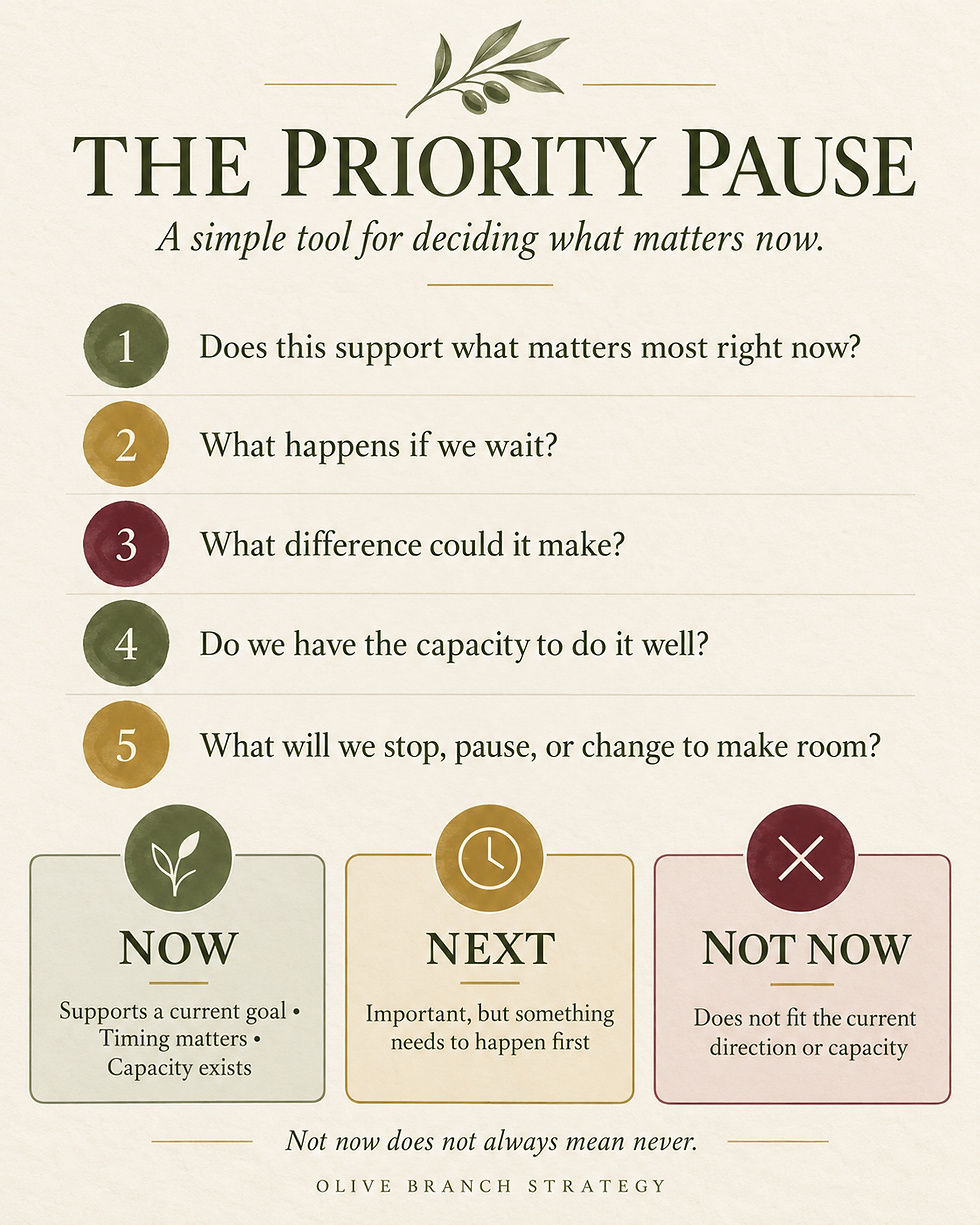
I like to ask three questions:
What needs attention now because waiting could cause harm or interrupt essential work?
What change would make other parts of the work easier?
What do we have the capacity to follow through on?
The answers help distinguish an immediate responsibility from a useful improvement and a project that needs to wait. Something can matter deeply and still belong in the “later” column.
Choose one manageable priority, name who will move it forward, and agree on what progress would look like. Be clear about what is being deferred so it does not keep sneaking back into every meeting wearing a different hat.
You do not need to solve the whole organization this month. You do need a starting point that makes sense, reflects what people are experiencing, and gives you something to learn from.
If a lot needs attention and you are having trouble finding that starting point, Coffee & Clarity is a place to talk it through. We can look at what is happening and what might be most useful to address first.
Comments